top of page
This site was designed with the
.com
website builder. Create your website today.
Start Now
surgical
mentor
Log In
see yourself further
Home
About
Read
Watch
Interviews
Previews
Collection
Listen
Resources
More
Use tab to navigate through the menu items.
Skills
Skills
Play Video
Play Video
05:09
Surgical Knot Tying: One-handed, Righty
Learn how to tie the mysterious one-handed surgeon's knot, with your right hand. Tune into my other video if you are left-handed, or an aspiring ambi-tyer. One-handed lefty: https://www.youtube.com/watch?v=Edt0EUJMZFE Two-handed righty: https://www.youtube.com/watch?v=o8OqxTGaS7o
Play Video
Play Video
10:31
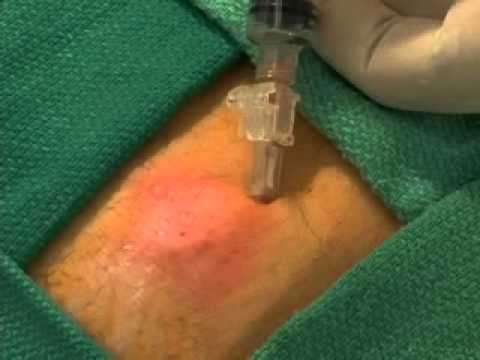
ABSCESS INCISION AND DRAINAGE
Play Video
Play Video
02:25
How to Palm Needle Driver
In this video, I show you how to palm needle driver using right and left hands with clear explanation for both... make sure you like, subscribe and share the video... palm grip needle driver in right hand palm grip needle driver in left hand like and comment and subscribe palming needle driver needle holder how to palm needle driver palm grip how to hold needle holder while suturing Video Chapters 0:00 Intro 0:55 Right hand palming technique 1:38 Left hand palming technique
Play Video
Play Video
05:45
Live Surgery: Running Subcuticular Suture. What is an Intracuticular or Subcuticular Suture?
www.MPSurgery.com www.hand411.com This is a discussion and demonstration of a Subcuticular or Intracuticular suturing. What is a running Subcuticular stitch? Its the last layer of closure of a wound after closing the dermal layer. It precisely aligns the tissue edges to promote optimal healing. I typically use 4-0 or 5-0 Monocryl suture to perform this closure. Key points with a subcuticular closure are placing the needle parallel to the skin after presenting a small segment of the dermis to yourself with your forceps. Bites are typically 1/3 the curvature of the needle. Be careful not to travel too much as you traverse the wound. Let the needle and instruments work for and with you. Many times I see students fighting the instruments to power the needle through the skin. With a proper set up the needle should easily traverse the dermis. Make sure to stay at the same level of the dermis as you traverse the skin. This will make sure edges are of even height and help with the healing and cosmesis of the incision. You can bury the beginning or ending knots however I typically bury the knot on the outside of the skin. There are instances where I bury the knot however.
Play Video
Play Video
03:33
Split Thickness Skin Graft Reconstruction Pearl: The Cerclage Reduction
This is an example of a simple way to reduce the size of a reconstructive defect using a cerclage. www.mpsurgery.com www.hand411.com
Play Video
Play Video
07:34
Splint like a pro: Sugartong Splint
Step by step instruction of how to place a fiberglass sugartong splint. This type of splint is used for management of distal radius/Colles' fractures. For more information, visit our website www.ercast.org
Play Video
Play Video
09:20
Applying a basic forearm circular cast
This demonstration shows how to apply a basic forearm circular cast. It is usually applied after realigning a forearm (distal radius) fracture to maintain its position. --- The AO Alliance Foundation is a developmental nonprofit organization dedicated to improving care for people with musculoskeletal injuries in low income countries. Learn more about us: http://goo.gl/0jeu7E
Play Video
Play Video
07:25
Superolateral Approach to Knee Aspiration
bottom of page